
Highlights: Chelsea rescue thrilling draw at Newcastle in heated classic
Video credit: TNT Sports
African football’s flagship tournament is set for a significant shift in its calendar, the Confederation of African Football announced on the eve of the 35th edition.
Since its inception in 1957, AFCON has largely been staged every two years, aside from an adjustment that saw back-to-back tournaments held in 2012 and 2013. That long-standing cycle will now come to an end.
The current format will remain in place through the next edition in 2027, which is scheduled to be hosted in East Africa. After that, AFCON will align with a four-year timetable, beginning with the tournament set for 2028.
Motsepe has outlined a broader overhaul of the continent’s international competitions, confirming plans for an African Nations League to be launched in 2029 and staged every year.
The CAF president framed the move as part of a wider vision for the game across the continent.
/origin-imgresizer.tntsports.io/2025/12/12/image-72e45fdb-d678-4e02-9ac9-d852fb28cf87-85-2560-1440.jpeg)
‘Nobody knows who is going to play’ – Amorim says losing key players to AFCON is frustrating
Video credit: SNTV
“I do what is in the interests of Africa,”Motsepe said. “The global calendar has to be significantly more synchronised and harmonised.”
Motsepe also pointed to the need for African football to better align with the wider international calendar, stressing that his decisions were guided by continental priorities.
“Historically, the Nations Cup was the prime resource for us but now we will get financial resources every year,” he added.
“It is an exciting new structure which will contribute to sustainable financial independence and ensure more synchronisation with the FIFA calendar.”
Financial incentives are also being raised, with CAF confirming a significant boost to AFCON’s prize fund. The champions’ payout will rise from $7 million (£5.2m) to $10m (£7.5m), underlining the governing body’s effort to increase the tournament’s commercial appeal.
/origin-imgresizer.tntsports.io/2025/12/20/image-22e6c5d9-7df9-4e25-8a76-8bf50351709e-85-2560-1440.jpeg)
CAF president Patrice Motsepe is ready to turn AFCON into a four-year tournament
Image credit: Getty Images
How was news received ahead of AFCON curtain-raiser?
The broader changes were unveiled by Motsepe following a CAF executive committee meeting in Morocco, held ahead of the opening of the 2025 finals in Rabat on Sunday, when the hosts face Comoros.
The announcement caught many by surprise, given how firmly the confederation had previously defended AFCON’s traditional rhythm.
For years, the tournament’s biennial format has sat uneasily within the global football calendar. Most recent editions have been staged in the middle of the European club campaign, regularly prompting tensions with clubs reluctant to release players.
Despite this, CAF has long resisted calls to move away from a two-year cycle, in large part because the competition’s revenue is central to funding football development across Africa.
An attempt was made in 2019 to ease those pressures by shifting AFCON to a June-July window, starting with the finals in Egypt.
/origin-imgresizer.tntsports.io/2024/02/12/3884856-78930048-2560-1440.jpg)
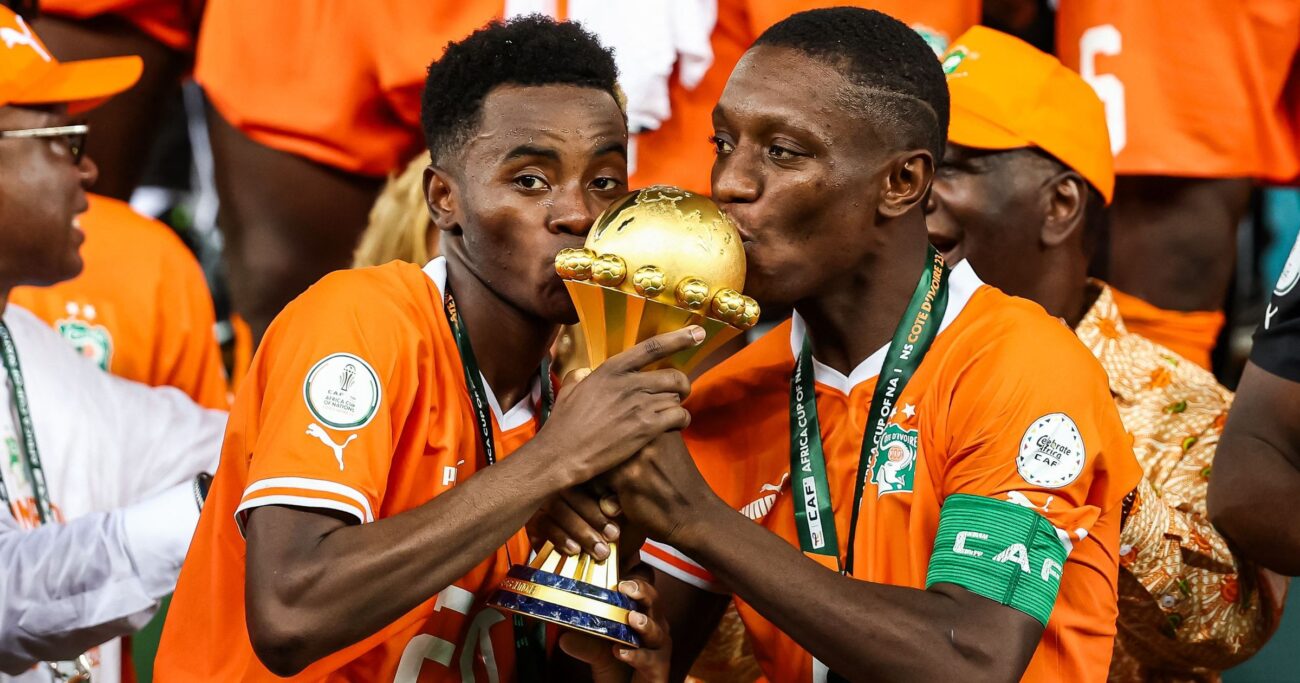
Ivory Coast celebrate winning the 2023 Africa Cup of Nations
Image credit: Getty Images
That plan, however, proved difficult to sustain. The COVID-19 pandemic disrupted schedules, while climate concerns in West African host nations forced a return to January and February dates for the 2021 and 2023 tournaments in Cameroon and Ivory Coast respectively.
Further complications followed this year with FIFA’s expanded 32-team Club World Cup occupying the summer calendar. That congestion pushed CAF back towards mid-season scheduling once again, contributing to another break from convention.
As a result, the upcoming AFCON in Morocco will set new ground by running across Christmas and New Year, with the final taking place on 18 January.
Looking further ahead, the 2027 finals in Kenya, Tanzania and Uganda still lack confirmed dates, and will be followed quickly by another edition in 2028, whose hosts have yet to be named.
/origin-imgresizer.tntsports.io/2025/12/20/image-2ae35ee4-df07-43c4-9430-308731f5d503-85-2560-1440.jpeg)
Mohamed Salah is among the Premier League stars now in Morocco
Image credit: Getty Images
From that point onward, AFCON will settle into a four-year cycle, aligning it with the same years as European Championships.
Motsepe said the move had been agreed in consultation with FIFA president Gianni Infantino and the organisation’s general secretary Mattias Grafstrom, acknowledging the need for flexibility and compromise.
“It is in the interests of the teams, clubs and players,” Motsepe added. “I can’t have players leaving their clubs in Europe in the mid-season. It’s wrong.
“We’ve got a duty to the players. We know how frustrating it is for the players when their club says they are needed but they are also needed for the country.
“It’s unfair for us to the players. We are solving this problem for us in Africa and for our African players.”
