
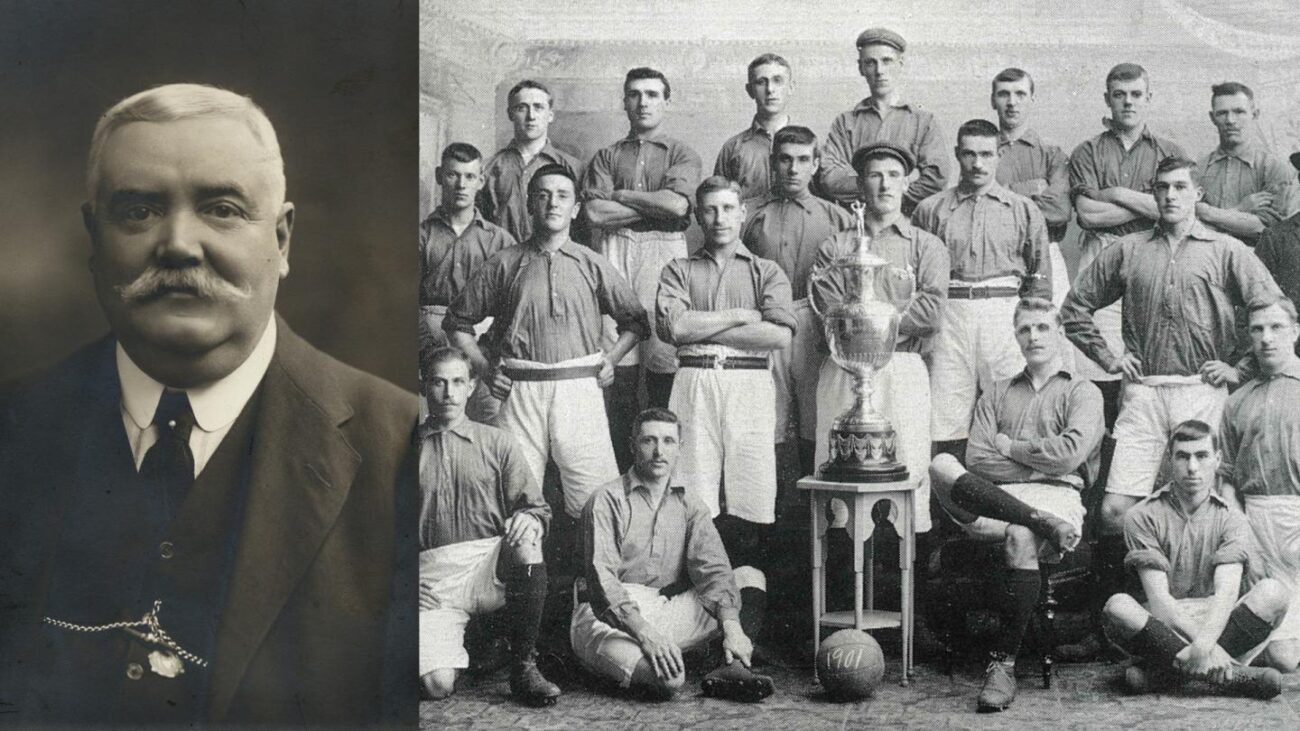
The former manager is viewed as a pioneer in the game and remains etched into the history of the Reds and the Black Cats for his role in helping establish success at each club during the early years of the Football League.
He was the first person to win a league title at two different clubs – with only three others achieving that feat since – and secured five in total throughout his career, with three of those coming during his time at Sunderland.
After moving to Anfield in 1896, he would guide Liverpool to their first two league championships in 1901 and 1906, while Watson also led the Reds to their first appearance in an FA Cup final, though they narrowly lost out to Burnley in 1914.
To this day, Watson remains Liverpool’s longest-serving manager by time period – and the total of 742 matches overseen during his tenure is second only to Bill Shankly (784).
He served in the Anfield dugout for 19 years from 1896 to 1915 until his death, when he tragically succumbed to pneumonia while in post.
“It was a real show of ambition at the time from Liverpool to get someone like Tom Watson to come to the club from Sunderland,” Jeff Goulding, who along with Kieran Smith co-authored Red Dawn: The Ballad of Tom Watson and Liverpool FC’s First Championstold Liverpoolfc.com.
“He was a hugely influential figure in football generally and a rising star. He’d had huge success in the north east and was forward-thinking in trying to drive the leagues forward.
“He had a lot of influence at Liverpool and he was an innovator. He was popular with supporters and a real character too. The Reds were a team of extremes when he arrived, really. They were either at the top or at the bottom. But he came in and laid the very foundations for the football club we see standing in front of us today.
“If you think about it, the club was established in 1892, and he came in and revolutionised things to the point where they won the top division within a decade.
