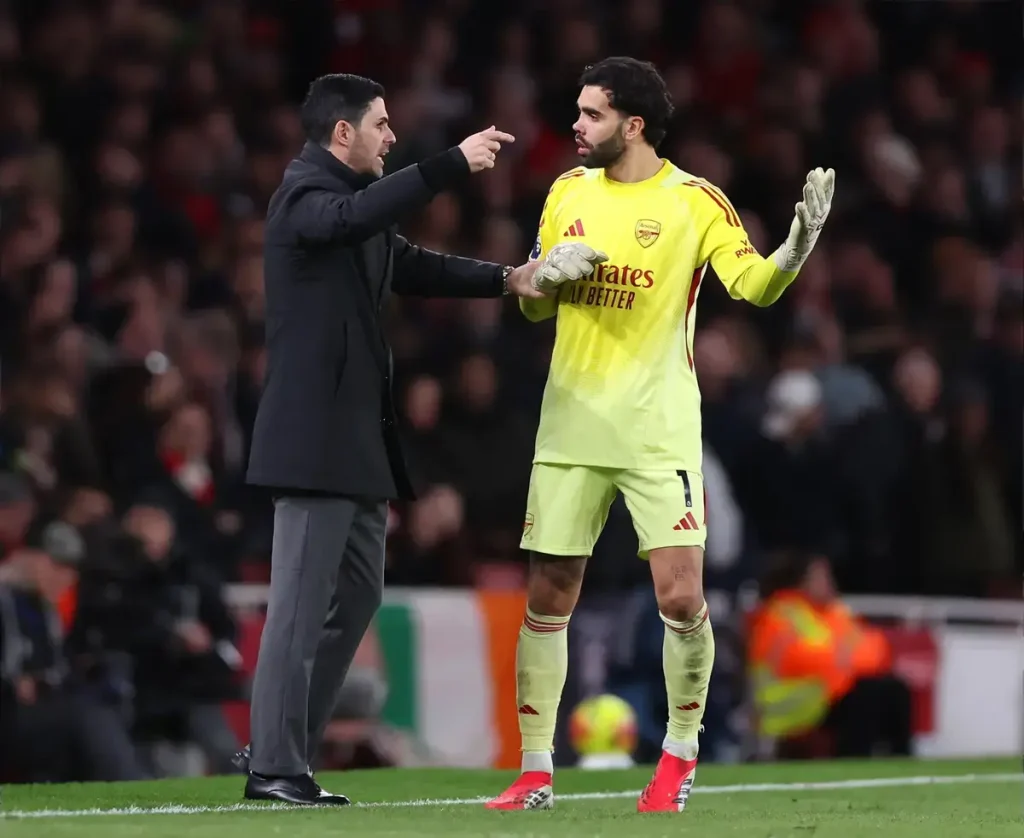
There is a version of Mikel Arteta that football has come to understand. Measured on the touchline, precise in his words, relentless in his pursuit of control. Every movement feels deliberate. Every decision carries intention.
For years now, that image has defined him, both as a coach and as the face of Arsenal’s modern identity.
However, every so often, the surface cracks.
Not through defeat. Not through pressure. Instead, through honesty.
“I felt so guilty.”
In that moment, Arteta does not speak as a manager. Rather, he speaks as a son. A young man chasing a dream while questioning what it cost the people closest to him. That distinction matters, because it reframes everything we think we know about him.
Arteta reveals the moment that shaped him
Firstly, Arteta does not dress the story up. Instead, he confronts it directly.
He recalls his parents’ divorce. He questions his own role in it. More importantly, he admits responsibility without hesitation. That level of accountability feels rare, particularly in a sport that often rewards deflection over reflection.
Because of that, this moment carries weight.
Why this explains Arteta’s need for control
As a result, his present begins to make more sense.
Arteta does not chase control for the sake of authority. Instead, he builds it to avoid chaos. When life once felt uncertain, he responded by constructing certainty wherever possible.
That mindset now shapes Arsenal.
However, it also creates tension when results slip.
Pressure looks different when it becomes personal
At the same time, this insight shifts how we view recent performances.
Criticism often centres on tactics. Discussion often focuses on selection. Yet, Arteta processes pressure differently. He absorbs it. He carries it.
Therefore, the touchline intensity does not come as a surprise.
It reflects something deeper than football.
Arsenal must now respond on the pitch
Consequently, responsibility extends beyond the manager.
Players like Bukayo Saka must take ownership in decisive moments. Likewise, Viktor Gyokeres must continue to bring clarity through direct, decisive play.
When Arsenal act with purpose, they control games. However, when hesitation creeps in, they invite pressure.
This is the side of Arteta rarely seen
Importantly, Arteta does not open up like this often.
He speaks about duty. He speaks about reconnection. He admits that certain decisions did not work, despite good intentions. That level of vulnerability adds depth to the public figure.
It reminds you that behind the structure sits a person shaped by experience.
And perhaps that explains everything.


