An ITV statement from Ed Chamberlin confirmed the sad news that HMS Seahorse tragically died

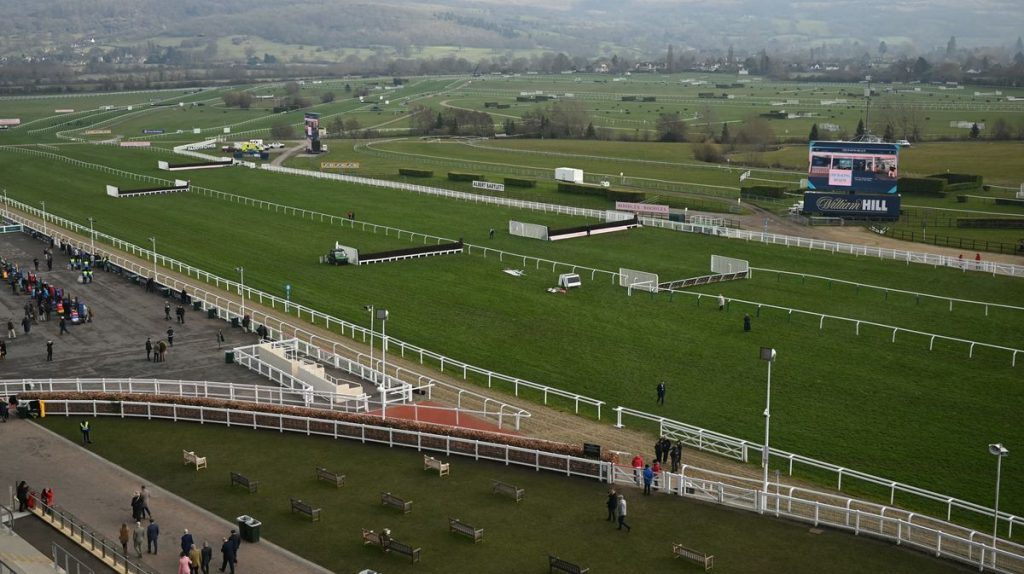
ITV issued a statement following the third race on day two of Cheltenham Festival(Image: (Photo by JUSTIN TALLIS/AFP via Getty Images) )
Cheltenham Festival horse HMS Seahorse has sadly died after suffering a fatal injury in the third race on Wednesday. ITV confirmed the sad news as a statement was read out on ITV confirming the second horse death of the Festival
The eight-year-old, trained by Paul Nolan, fell at the last hurdle in the 2.40pm BetMGM Cup Handicap Hurdle and, despite the best efforts of veterinary professionals, sadly passed away.
HMS Seahorse is the second horse to have died, with Hansard tragically dying after a fall in the second race of day one. Lead ITV presenter Ed Chamberlin confirmed the news as he read out a statement from Cheltenham.
The statement said that the eight-year-old was “immediately attended to by a team of expert vets during our third race of the day, but sadly sustained an injury when falling at the final hurdle and could not be saved. Our heartfelt condolences are with connections.”
READ MORE: Cheltenham Festival RECAP: Il Etait Temps lands Champion Chase as furious jockeys clashREAD MORE: Cheltenham Festival jockey row explodes as amateur claims ‘abuse’ in remarkable TV rant
Like all sports, horse racing involves risks, but The Jockey Club – the owners of 15 racecourses in the UK and the organisers of both the Cheltenham and Aintree Festivals – work tirelessly to continuously minimise the risks at its events.
Since 2000, the racing industry has invested more than £63 million in equine welfare, including veterinary science, education and research.
British racing has an independently-chaired Horse Welfare Board, whose long-term strategic plan ‘A Life Well Lived’ is already yielding results.
JOIN US ON FACEBOOK! All the best sports news and much more on our dedicated Facebook page
The rate of fallers in horse races has declined in all of the last 21 years and is now just 1.98% of runners. The fatal injury rate in 2025 was just 0.22% of 86,300 runners.
Some of the changes made include the changing of markers on jumps on all racecourses from orange to white, following research by Exeter University into equine vision.
The change to padded hurdles after data found this would reduce fallers by 11% and the introduction of a detailed review process within 48 hours of every fatality on a racecourse.
The racing industry regularly consults with established welfare organisations such as World Horse Welfare, RSPCA and Blue Cross to ensure it continually meets the highest standards.
Over 80% of people say their perceptions of horse welfare change after visiting studs, training yards and aftercare centres.
Sixty-five thousand free places for visits to centres become available during National Racehorse Week, which this year takes place from August 22nd to 31st.
With five million attendees in 2025, horse racing is the second-most attended sport in the UK behind football.


