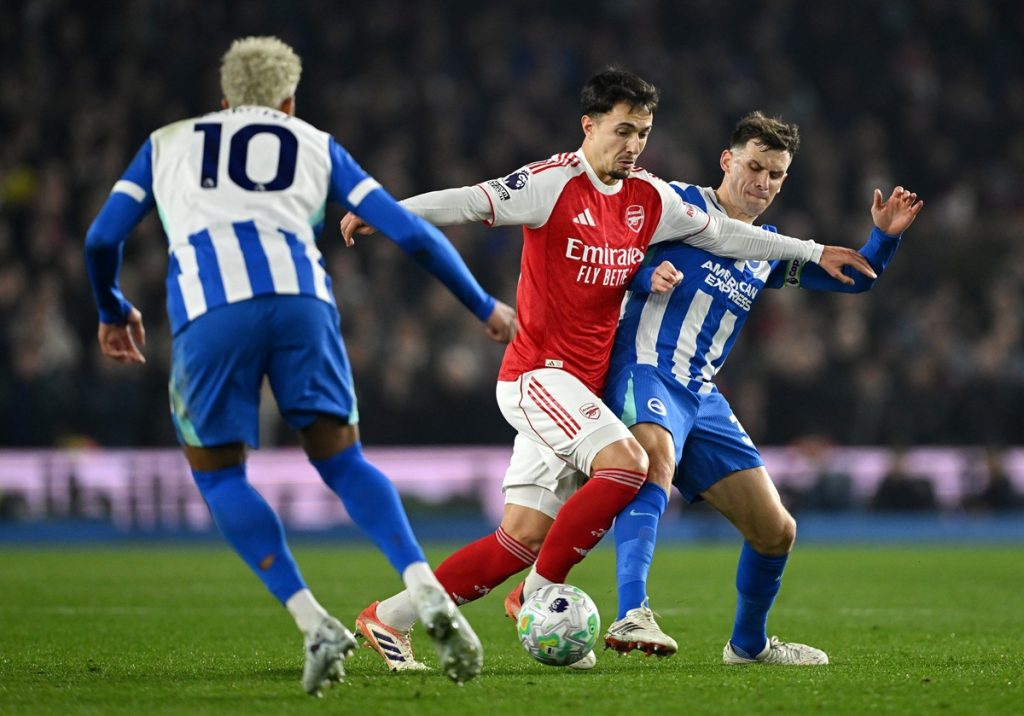
Arsenal’s game in Brighton in March reignited criticism of football officials and particularly video assistant referees. People are fed up with VAR failings. But could a small adjustment make VAR a lot better?
In the heightened atmosphere during the post incident decision making process of a VAR verdict, and also after a match when such decisions have altered results, it is easy to forget that VAR is still relatively new in football and may need adjustments to make it more effective and more sporting.
One of those adjustments which could be easily, promptly and fairly introduced would be to drop the phase of play video scrutiny that accompanies many VAR examinations during the current decision making process.
The problem with VAR phase of play reviews
Looking at the time spent reaching conclusions, particularly about disallowed goals and penalties, we can see that the trawling back through phases of play in order to find previously unnoticed infringements is one of the main causes of frustration for everyone involved.
These problems affect the whole atmosphere and flow of a game, frustrating fans, players, managers and referees themselves, lowering faith not only in VAR decisions but in the refereeing process itself. This often leads to people attributing match results to VAR decisions, as was the case in Arsenal’s one nil away win against Brighton.
These lengthy replay examinations based on finding what might have happened before an incident are not always necessary and are causing problems so significant that many now believe VAR should be abandoned altogether.
The game could be returned to something closer to what it was before VAR simply by dropping the phase of play requirement that allows unnoticed incidents to be reviewed during the decision process.
Others have proposed that VAR should review incidents in real time rather than slow motion, both speeding up decisions and avoiding the exaggeration of minor contact that can look far worse when slowed down.
Many fans do not understand why VAR decisions take so long. The reason appears to be that officials are checking every tackle and off the ball incident during the phase of play before the moment being reviewed, which can feel like an attempt to find reasons to disallow goals rather than support referees.

How VAR could still improve football
VAR was introduced to assist on field officials. However, the phase of play element risks clouding that purpose, reducing the joy of football, especially spontaneous celebrations, and disrupting the emotional flow of matches while also undermining confidence in the system.
In the Premier League, managers, fans, referees and players are regularly left frustrated by the disconnect created by these lengthy reviews. A tool designed to support referees risks doing the opposite when decisions take too long and appear overly complicated.
Another concern is that the elite game risks becoming disconnected from the version of football played everywhere else. That shared understanding, from grassroots football to cup finals, has always been part of the sport’s appeal.
There is no need to abandon VAR completely because of one potentially adjustable element. VAR still has the potential to improve football and support referees, which was its original purpose before phase of play reviews became so prominent.
We have had VAR in the Premier League since the 2019 to 2020 season and a proper consultation involving players, fans, managers and referees feels overdue. Rather than framing the debate as keeping or removing VAR, the focus should be on improving it.
Many of VAR’s current issues could be reduced by removing the phase of play rule where incidents not previously flagged are searched for during reviews. This can waste time, distract from the main decision and interrupt the natural rhythm of matches.
Dropping this requirement could allow VAR officials to focus purely on the key incident, potentially reducing controversial decisions and the need for later apologies.
One recent example involved Martinelli’s tackle on Wiefer against Brighton. That mistake actually benefited Arsenal, as a penalty that could have been given was not, a decision later judged incorrect by the Premier League Key Match Incidents panel. Would that mistake have happened if the VAR official had focused only on the main incident rather than reviewing earlier phases?
Matches could be trialled without phase of play reviews before making permanent changes to see whether this improves match flow, satisfaction and decision making accuracy.
The question now is whether those running the game in the UK are willing to consider a simple adjustment that could restore some trust between officials and everyone involved in football.
For the sake of the game, and everyone who loves it, it feels like a conversation worth having.
Do you think VAR just needs improving, or do you believe it is beyond fixing?
Reader Opinion (Chris)
_____________________________________________________________________________________________
ADMIN COMMENT
So here are some simple rules which I must insist commenters follow….
You agree not to give any personal abuse to other Arsenal fans. Everyone is allowed to hold their own opinions even if you disagree with them. It COSTS NOTHING TO BE POLITE TO OTHER ARSENAL FANS.
CALLING ALL ARSENAL FANS! Anyone who would like to contribute an Article or Video opinion piece on JustArsenal, don’t hesitate to get in touch with us through this link…